
When we speak of violence — particularly the most heinous forms such as rape, torture, or murder — the image that instinctively arises is that of a man. And indeed, statistics affirm that in most cases, it is. Yet history has shown that women, too, can be capable of unspeakable brutality. Still, when a woman commits a crime of extraordinary cruelty, it defies comprehension; it unsettles our sense of natural order.
Such is the case of Dahbia Benkired, a twenty-four-year-old Algerian woman living unlawfully in France, who in 2022 committed one of the most barbaric crimes in recent European history — the rape and murder of twelve-year-old Lola Daviet. The act not only horrified France but shook the world for its unimaginable savagery.
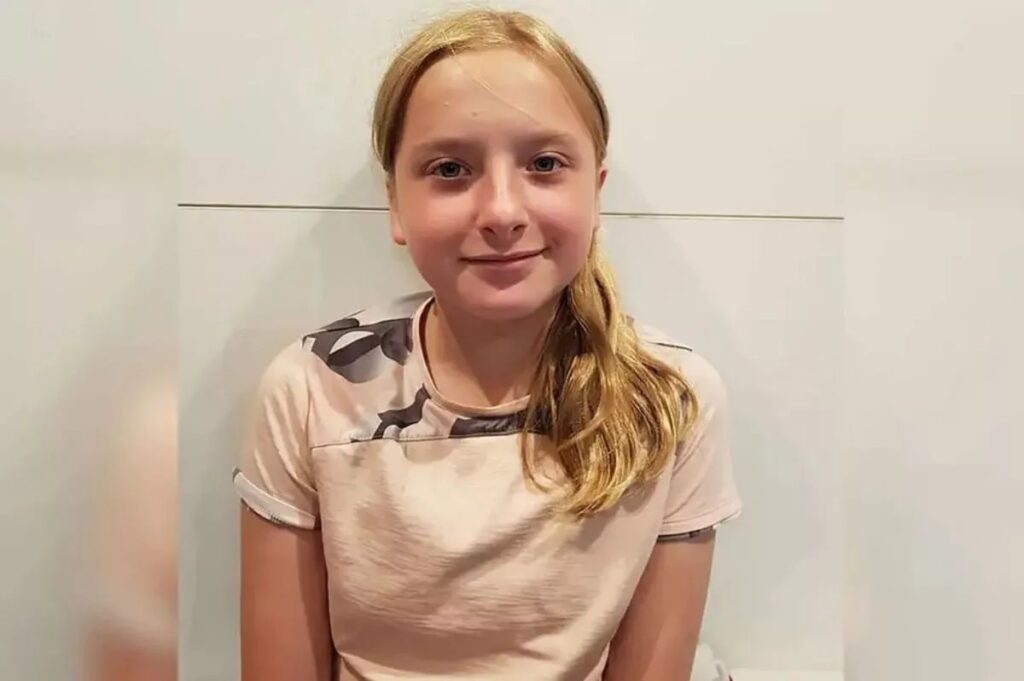
The Facts of the Case
Benkired first arrived in France on a student visa, but after it expired, she overstayed and remained illegally. Her life in France was marked by instability, drug abuse, and prostitution. According to her defence counsel, she had herself been a victim of violence and sexual abuse in Algeria — subjected to beatings by her father, assaulted by a neighbour at the age of twelve, and forced into sexual acts by relatives. After her parents’ deaths, her behaviour reportedly became increasingly erratic.
Lola’s family, by tragic coincidence, lived in the same Parisian building as Benkired’s sister. Lola’s parents were the caretakers of that building. When Lola’s mother refused to provide Benkired with an access card — an act of simple administrative refusal — it ignited in Benkired a vengeful rage. She devised a plan to retaliate in the most grotesque manner imaginable.
On the afternoon of 14 October 2022, she lured Lola to her sister’s apartment. What took place there over the next ninety minutes was an ordeal of horror. The child was raped, tortured, and strangled, her body showing signs of multiple stab wounds and asphyxiation. After the killing, Benkired stuffed the mutilated corpse into a large travel trunk, wrapped it in plastic, and left the building, dragging the trunk behind her. Surveillance footage captured her calm composure as she passed by unsuspecting residents.
When police later confronted her with evidence, she confessed. Her motive, she said, was her dispute with Lola’s mother. Shown photographs of the crime scene, she reportedly displayed chilling indifference, remarking only that she too had been a victim of rape — a grotesque attempt at moral equivalence.
The Trial and Sentence
The case proceeded to trial in October 2025 before the Paris Assizes Court. Over the course of a week, prosecutors presented an overwhelming account of premeditation and cruelty. Psychiatric experts testified that Benkired was of sound mind and normal intelligence, showing no psychological disorder that could diminish her responsibility. What they observed instead was pathological narcissism, a total absence of empathy, and an alarming potential for reoffending.
On 24 October 2025, the court sentenced her to life imprisonment without parole — formally known as réclusion criminelle à perpétuité incompressible or perpétuité réelle. It is France’s most severe sentence, reserved for the rarest and most abominable crimes. Since its introduction in 1994, only four men had ever received it. Dahbia Benkired is the first woman in French history to bear that fate.
The Aftermath and Broader Implications
The murder of Lola Daviet left France not only in mourning but in shock. The crime defied gendered assumptions about violence. A woman — traditionally seen as a nurturer, a protector, a mother — had committed an act so vile it rivalled the worst deeds of history’s most monstrous men.
To compound the tragedy, Lola’s father, consumed by grief and depression after his daughter’s death, succumbed to alcoholism and died a year later. The devastation of one act of evil thus rippled through an entire family.
Politically, the case ignited fierce debate. Because Benkired was an undocumented migrant, right-wing parties seized upon the incident to reinforce anti-immigration rhetoric. Yet to reduce this crime to a question of nationality is to miss the deeper, darker reality: evil knows no borders, no gender, no race.
The more troubling question is why society repeatedly fails to identify and intervene when individuals display clear signs of danger. Benkired’s erratic behaviour, drug dependency, and social instability were well known. Yet she slipped through the cracks — neglected by the state, ignored by psychiatric services, unseen by social care. The price of that neglect was a child’s life.

Reflections on Female Criminality
This case is rare not because women are incapable of violence, but because such extreme, sadistic brutality shatters the comforting myth of female gentleness. Female offenders, when they do commit grave crimes, often do so through methods rooted in psychological domination, manipulation, or revenge — but here, the violence was physical, sexual, and cruelly deliberate.
In that sense, the crime is doubly horrifying: not only for its barbarity, but because it dismantles every assumption we have about gender and evil. Society is unprepared for women like Dahbia Benkired, because it refuses to believe such women exist until it is too late.
Conclusion
The story of Dahbia Benkired and Lola Daviet is one of unbearable sorrow and moral reckoning. It forces us to ask what happens when the archetype of the caregiver turns into the executioner. The devil, it seems, wears many masks — and when she wears the face of a woman, her disguise is the most terrifying of all.
Violence is not the domain of men alone; it is a human capacity, one that festers in the absence of empathy and accountability. This crime is a reminder that danger often hides in plain sight, that our social systems fail those who most need protection, and that justice — even when served — cannot restore what was lost.
The tragedy of Lola Daviet has stripped away one of humanity’s oldest delusions — that evil can be recognised by its face or confined to a single form. In truth, it lurks behind smiles, behind softness, behind what we believe to be harmless. And that revelation has forever altered how we see the world around us.
Written by Sana Pirzada